
YOUR HOME’S VALVE SYSTEM
The Valve Tree: Every Valve From the Street to Your Faucet
Your home’s plumbing starts at the street and passes through a series of critical valves before water reaches a single fixture. Here’s what each one does and why it matters.
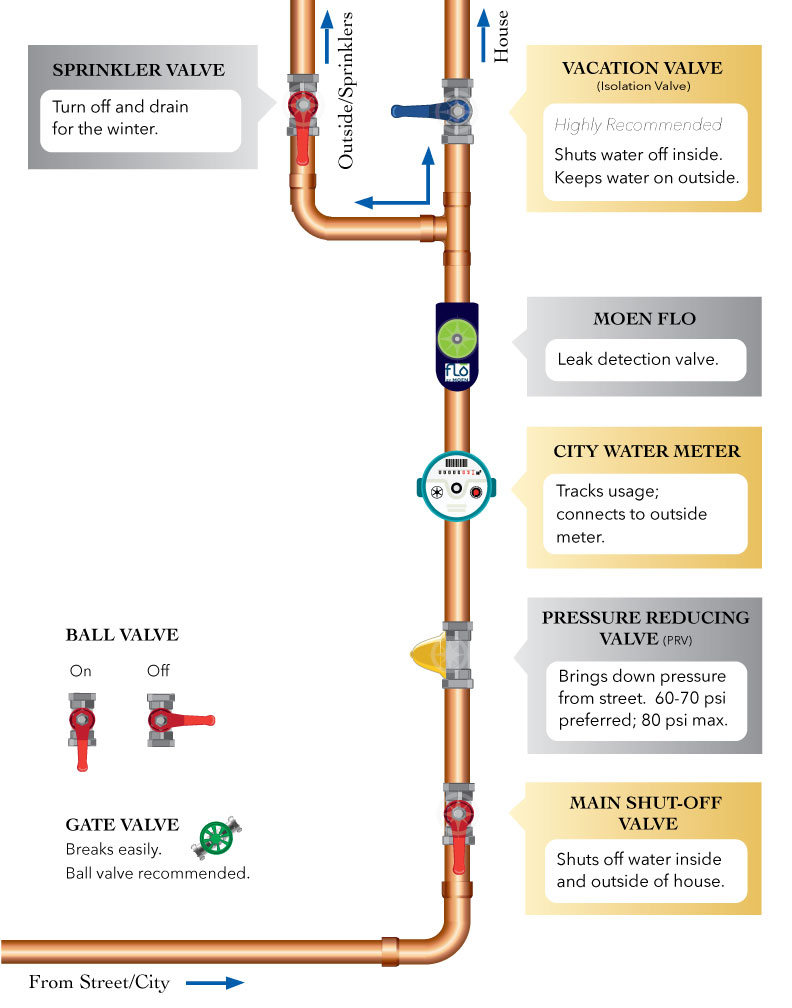
Main Shutoff Valve
The water meter is owned and maintained by your local water district — you’ll typically find it in a covered box near the street or sidewalk. It measures every gallon of water that flows into your home and is what your water bill is based on. While you can read the meter yourself to check for leaks, only the water company is authorized to service, repair, or replace it.
Smart Water Shutoff Valve
A smart valve can replace your main shutoff valve to add a critical layer of protection. Systems like Leak Defense and Moen Flo monitor your water usage around the clock and automatically shut off the water supply if a leak is detected — even when you’re not home. It’s the single best upgrade for preventing catastrophic water damage.
Vacation Valve
Heading out of town during the summer? A vacation valve lets you shut off water to the interior of your home while keeping your outdoor plumbing running — sprinkler systems, hose bibbs, and irrigation lines stay active. Your lawn stays green, your landscaping stays healthy, and your home is protected from interior leaks while you’re away. It’s a simple, smart addition to any Colorado home.
Pressure Reducing Valve (PRV)
Municipal water pressure often enters homes at 80 psi or higher — far more than your plumbing is designed to handle. A pressure reducing valve brings that down to a safe range, typically around 60 psi. Without one, high pressure silently damages pipes, fixtures, water heaters, and appliance connections over time, leading to leaks, blown supply lines, and expensive repairs.
SHOWER VALVES
The Hidden Valve Behind Your Shower Wall
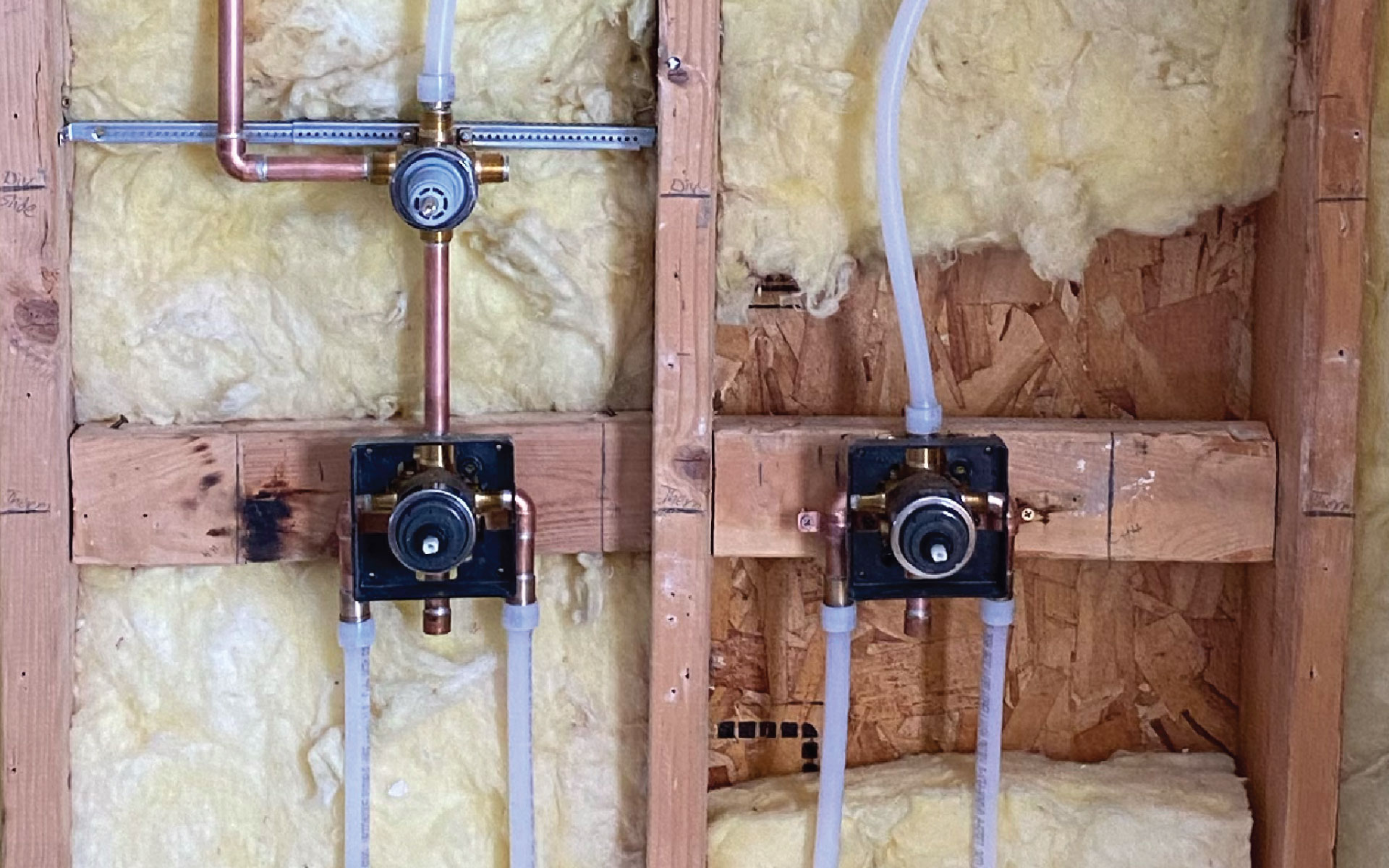
Your shower valve controls both the temperature and flow of water every time you step in. Over time, these valves wear out — leading to temperature swings, difficulty turning the handle, or water that won’t get hot enough. Older single-handle cartridge valves and three-handle setups are especially prone to failure. Replacing a worn shower valve restores reliable temperature control and prevents damage to surrounding tile and framing.