

What’s Really in Your South Denver Tap Water?

Your water may meet federal legal standards — but “legal” doesn’t always mean safe. South Denver homeowners face real concerns from PFAS, microplastics, disinfection byproducts, and more. Here’s what you should know and what you can do about it.

THE REAL PICTURE

Legal Doesn’t Mean Safe

Colorado’s tap water originates from some of the most pristine mountain sources in the country. Snow melts from the Rockies and flows through the South Platte, Blue, and Fraser Rivers before being treated and delivered to homes across the South Denver metro. But the journey from mountain to faucet is a long one — and along the way, water picks up contaminants both natural and man-made.

Federal legal limits for contaminants in tap water have not been updated in almost 20 years. According to the Environmental Working Group (EWG), multiple water systems serving the South Denver area — including Centennial Water and Sanitation District, Denver Water, and South Adams County Water and Sanitation District — have detected contaminants at levels that exceed EWG’s health guidelines, even while remaining within outdated federal legal limits.

Sources: EWG — Centennial Water & Sanitation, EWG — Denver Water, 5280 Magazine
850+ Google Reviews

Serving South Metro Denver

Family Operated

Insured

KEY CONCERNS

Contaminants Found in South Denver Water

These are the primary water quality concerns identified by environmental researchers, state agencies, and independent testing organizations for our region.

PFAS — “Forever Chemicals”

Per- and polyfluoroalkyl substances are human-made chemicals found in nonstick cookware, food packaging, and firefighting foam. They don’t naturally break down and have been linked to increased risk of certain cancers, thyroid disruption, and developmental issues. Multiple PFAS compounds have been detected in South Denver water systems. In 2023, a Commerce City refinery was found discharging PFAS into Sand Creek at rates far above EPA guidelines — and that waterway feeds the South Platte River.

Source: 5280 Magazine

Microplastics

A study by Environment Colorado Research & Policy Center found microplastics present in all 16 Front Range bodies of water tested. These tiny plastic fragments — smaller than a pencil tip — wash off synthetic clothing, drift from landfills, and even fall with raindrops. While water treatment plants catch most microplastics, these particles have been found in human tissue. Few federal standards exist to regulate them in drinking water.

Source: 5280 Magazine

Lead

Older homes throughout the Denver metro area may have lead service lines that leach the toxic metal into treated water. Lead exposure can harm brain development, cause anemia, and create fertility issues. Denver Water launched a major Lead Reduction Program in 2020 to replace old lines with copper, but the process takes time. In Colorado, 72 percent of children under six have detectable levels of lead in their blood — well above the 51 percent national average.

Source: 5280 Magazine

Disinfection Byproducts (THMs & HAAs)

When chlorine is used to disinfect water — a necessary step — it can react with organic material to form trihalomethanes (TTHMs) and haloacetic acids (HAAs). These byproducts are associated with increased cancer risk and potential pregnancy complications. EWG testing of the Centennial Water and Sanitation District found haloacetic acids at levels far above health guidelines, despite remaining within the federal legal limit.

Source: EWG Tap Water Database

Arsenic

Arsenic is a potent carcinogen that occurs naturally in Colorado’s geology. According to EWG data, arsenic has been detected in the Centennial Water and Sanitation District at levels well above EWG’s health guideline, though still within the federal legal limit. Arsenic in drinking water causes thousands of cancer cases annually across the U.S.

Source: EWG Tap Water Database

Radium & Uranium

These naturally occurring radioactive materials are present in Colorado’s groundwater. EWG data for the Centennial Water and Sanitation District shows radium levels above health guidelines. Consumed over extended periods, radium can damage teeth, lead to birth defects, and increase cancer risk. Colorado is home to some of the worst radium levels in the nation — six of the 10 worst water systems for radium are in the state.

Sources: EWG, 5280 Magazine

WHAT YOU CAN DO

Filtration Solutions for Your Home

01

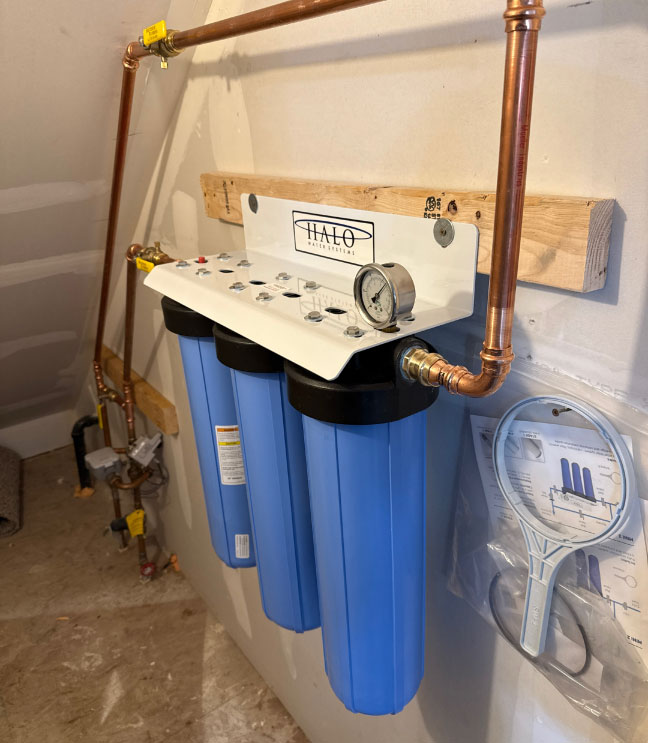
Whole-House Carbon Filtration

Activated carbon filters are effective at reducing chlorine, chloramines, disinfection byproducts (THMs and HAAs), PFAS, pesticides, and volatile organic compounds. A whole-house system treats every drop of water entering your home — from the kitchen faucet to the shower.

02

Reverse Osmosis (Under-Sink)

RO systems provide the most thorough filtration available for drinking water. They are effective at reducing arsenic, radium, uranium, lead, PFAS, nitrates, and fluoride — contaminants that carbon filters alone may not fully address. Ideal for your kitchen sink where you drink and cook.

03

Water Softening & Conditioning

Colorado’s hard water creates scale buildup that damages pipes, water heaters, and appliances. A softener or conditioner extends the life of your plumbing and improves the effectiveness of soap and detergent — while protecting your water heater investment.

04

Free Water Quality Consultation

Not sure where to start? Our master plumbers can assess your home’s water quality needs and recommend the right combination of filtration, softening, and treatment based on your specific water source and household priorities.

Protect Your Family’s Water Today

Schedule with Southside Plumbing today.