

Understanding the Valves in Your Home’s Plumbing System

Every valve in your home has a critical job — from controlling water flow to protecting against leaks and high pressure. Knowing what each valve does helps you protect your home and respond fast in an emergency.

YOUR HOME’S VALVE SYSTEM

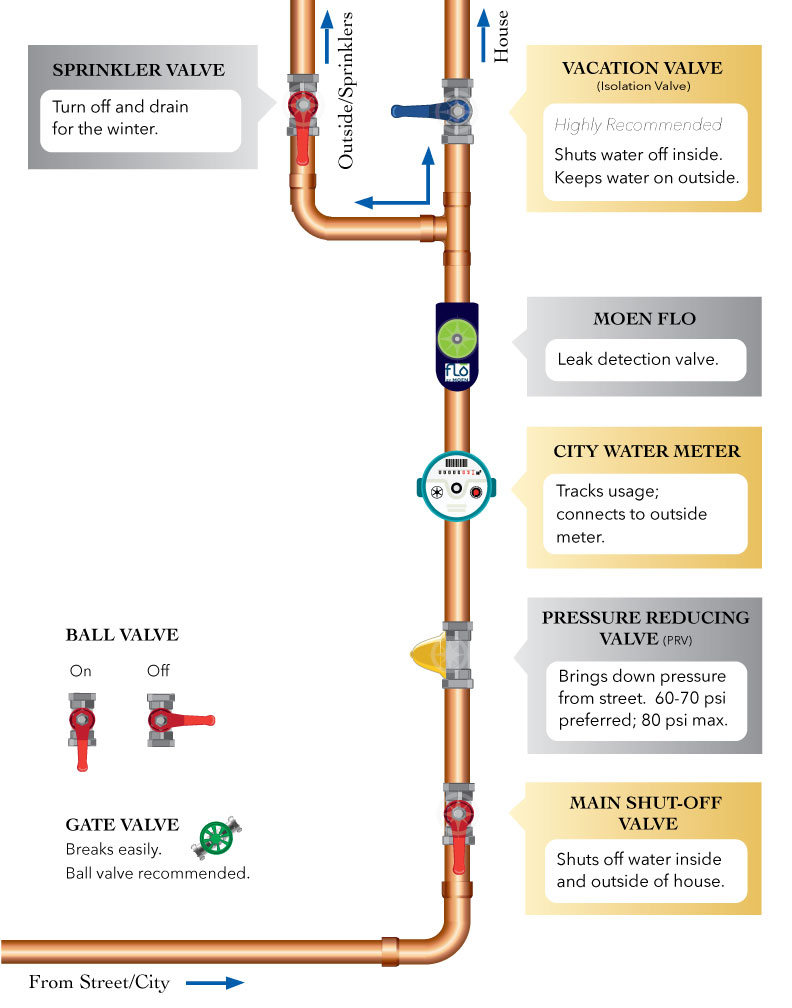
The Valve Tree: Every Valve From the Street to Your Faucet

Your home’s plumbing starts at the street and passes through a series of critical valves before water reaches a single fixture. Here’s what each one does and why it matters.

Main Shutoff Valve

The water meter is owned and maintained by your local water district — you’ll typically find it in a covered box near the street or sidewalk. It measures every gallon of water that flows into your home and is what your water bill is based on. While you can read the meter yourself to check for leaks, only the water company is authorized to service, repair, or replace it.

Smart Water Shutoff Valve

A smart valve can replace your main shutoff valve to add a critical layer of protection. Systems like Leak Defense and Moen Flo monitor your water usage around the clock and automatically shut off the water supply if a leak is detected — even when you’re not home. It’s the single best upgrade for preventing catastrophic water damage.

Vacation Valve

Heading out of town during the summer? A vacation valve lets you shut off water to the interior of your home while keeping your outdoor plumbing running — sprinkler systems, hose bibbs, and irrigation lines stay active. Your lawn stays green, your landscaping stays healthy, and your home is protected from interior leaks while you’re away. It’s a simple, smart addition to any Colorado home.

Pressure Reducing Valve (PRV)

Municipal water pressure often enters homes at 80 psi or higher — far more than your plumbing is designed to handle. A pressure reducing valve brings that down to a safe range, typically around 60 psi. Without one, high pressure silently damages pipes, fixtures, water heaters, and appliance connections over time, leading to leaks, blown supply lines, and expensive repairs.
SHOWER VALVES

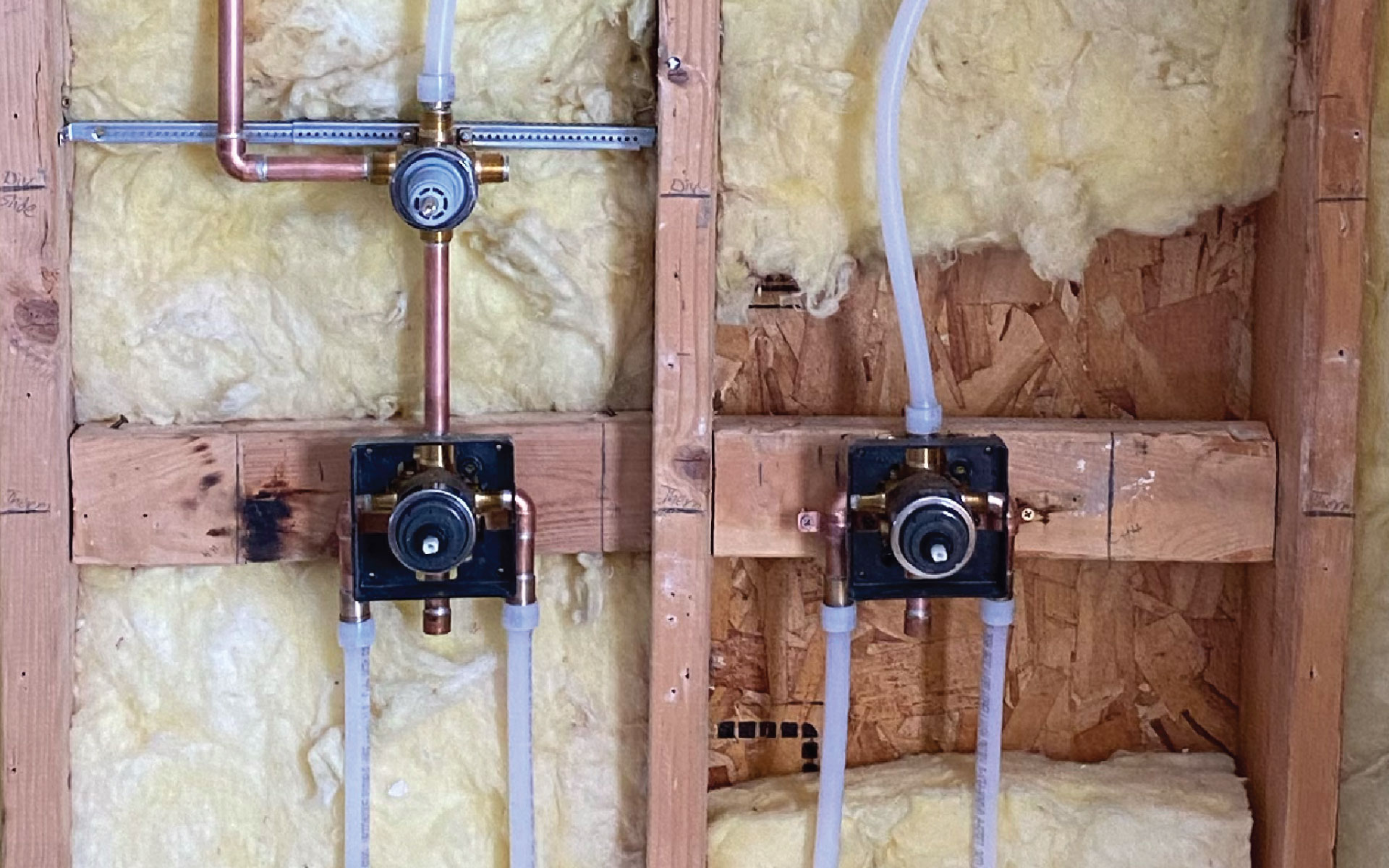
The Hidden Valve Behind Your Shower Wall

Your shower valve controls both the temperature and flow of water every time you step in. Over time, these valves wear out — leading to temperature swings, difficulty turning the handle, or water that won’t get hot enough. Older single-handle cartridge valves and three-handle setups are especially prone to failure. Replacing a worn shower valve restores reliable temperature control and prevents damage to surrounding tile and framing.
WHAT WE DO

Valve Services We Provide

From a simple shutoff valve replacement to a full smart valve upgrade, our master plumbers handle every valve-related service with precision.

Main Shutoff Valve Replacement

Upgrade an old, unreliable gate valve to a modern quarter-turn ball valve. We ensure your main shutoff works when you need it most — in an emergency.

Smart Valve Installation

We install Leak Defense and Moen Flo smart water shutoff systems that monitor for leaks 24/7 and automatically shut off water to prevent damage.

PRV Installation & Replacement

Protect your home’s plumbing from damaging high pressure. We install and replace pressure reducing valves to keep your system at a safe, consistent 60 psi.

Vacation Valve Installation

Keep your sprinklers running while shutting off interior water during vacations. A vacation valve gives you peace of mind and a green lawn all summer long.

Shower Valve Replacement

Restore reliable temperature control and smooth operation. We replace worn cartridge valves, upgrade outdated three-handle setups, and handle all behind-the-wall work.

Valve Inspection & Testing

Not sure if your valves are working properly? We test shutoff valves, check PRV pressure readings, and inspect your entire valve tree to find issues before they become emergencies.

Valve FAQ

A pressure reducing valve (PRV) regulates the water pressure entering your home, typically keeping it around 60 psi. Municipal water pressure can reach 80 to 150 psi or more — far more than your home’s pipes and fixtures are designed to handle. Without a PRV, that excess pressure silently damages pipes, causes faucet drips, wears out water heater components, and can even blow washing machine supply lines. A functioning PRV is one of the most important protective devices in your plumbing system.

In most Highlands Ranch and South Denver metro homes, the main water shutoff valve is located near where the water line enters your home — typically in the basement, crawl space, or utility room close to the water heater. It’s usually a gate valve (round handle) or ball valve (lever handle) on the pipe coming in from the street. We recommend every homeowner locate and test their main shutoff valve before an emergency happens.

A smart water shutoff valve replaces your main shutoff valve and adds leak detection and automatic shutoff capabilities. Systems like Leak Defense and Moen Flo monitor your water flow 24/7, learn your home’s normal usage patterns, and can automatically turn off the water supply if something abnormal is detected — like a burst pipe or a running toilet. You can also control it from your phone, which is especially valuable when you’re traveling.

A vacation valve allows you to shut off water inside your home while keeping your outdoor plumbing active — sprinkler systems, hose bibbs, and irrigation lines all continue running normally. This is especially valuable in Colorado during the summer months when you’re traveling but still need to keep your lawn and landscaping watered. It’s an affordable addition that protects your home from interior leaks without sacrificing your yard.

Absolutely — and every homeowner should know how. In an emergency like a burst pipe or major leak, turning off the main valve quickly can prevent thousands of dollars in water damage. Ball valves (lever handle) turn off with a quarter turn. Gate valves (round handle) turn clockwise several full rotations to close. If your valve is stuck, corroded, or difficult to turn, don’t force it — call us and we’ll replace it so it’s ready when you need it.

It depends on the valve type. Pressure reducing valves typically last 7 to 12 years before they need replacement. Main shutoff valves — especially older gate valves — can become unreliable after 15 to 20 years and should be upgraded to a ball valve. Shower valves wear out based on use, but common signs include temperature fluctuations, handle difficulty, and dripping when the faucet is off. During any whole-home plumbing inspection, we check every valve for proper operation.

Need a Valve Inspected, Repaired, or Replaced?

Schedule with Southside Plumbing today.